
Selection of automotive parts materials
Automotive
For drive gears, compare tooth-root loading and tooth wear; for clips, assembly cracking and retention; for fuel and water-system parts, dimensions and sealing after fluid exposure. Use observed failures to compare candidate grades and relevant properties.
Automotive
For drive gears, compare tooth-root loading and tooth wear; for clips, assembly cracking and retention; for fuel and water-system parts, dimensions and sealing after fluid exposure. Use observed failures to compare candidate grades and relevant properties.Material requirements for automotive parts
Visibility & window systems
For continuous meshing, control tooth heat and wear; for starts or reversals, balance root loading with impact toughness.
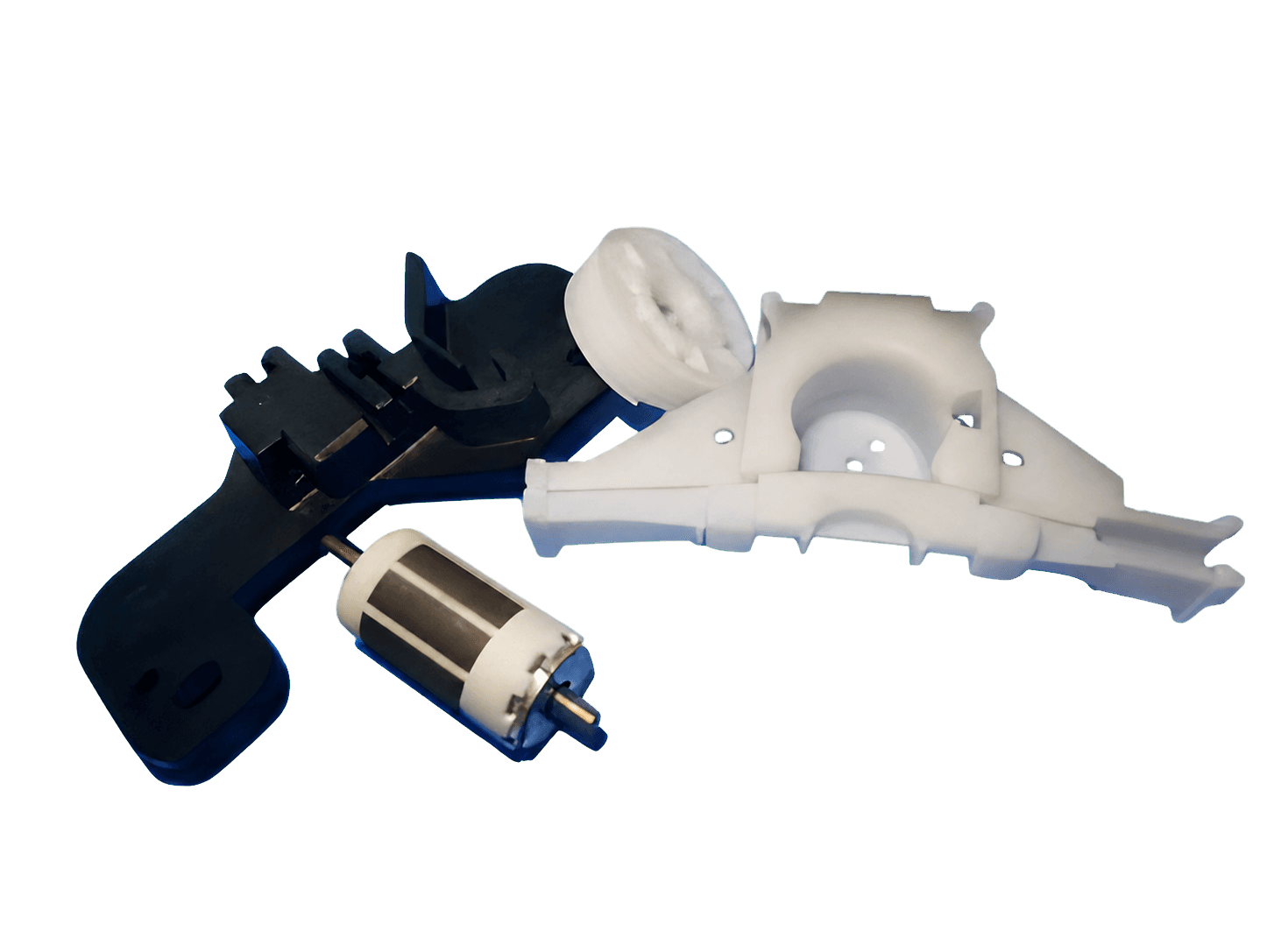
Window lifts
Repeated window travel wears teeth and guides, increasing backlash noise. Compare wear and starting resistance, then root behavior under reversal impact.
Material direction for the selected part · Window lifts
Wear-resistant & low-friction POM
For meshing or sliding wear and clearance growth, shortlist MoS₂-modified EMS102 and EMS162. Start with EMS102 for flow-sensitive molding and EMS162 when tensile strength leads selection.
For low-speed starts, dry sliding or stick-slip noise, start with PTFE-modified EPTL402. Compare starting force, running torque and wear separately for steel–plastic and plastic–plastic pairs.
View materials & gradesWindow regulator carrier plate · EGH402H
These cases concern carrier plates and housings; gears and sliding parts need separate material selection.
Mounting-hole stability under heat and load
EGH402H POM with 20% glass fiber and molding adjustments helped improve mounting-hole stability under heat and sustained load.
Validation stageFurther vehicle-project validation
Fuel management
Fluid-induced dimensional changes alter motion clearance and sealing. Define exposure by fuel composition and temperature, then compare wear, dimensions and customer-required documents.
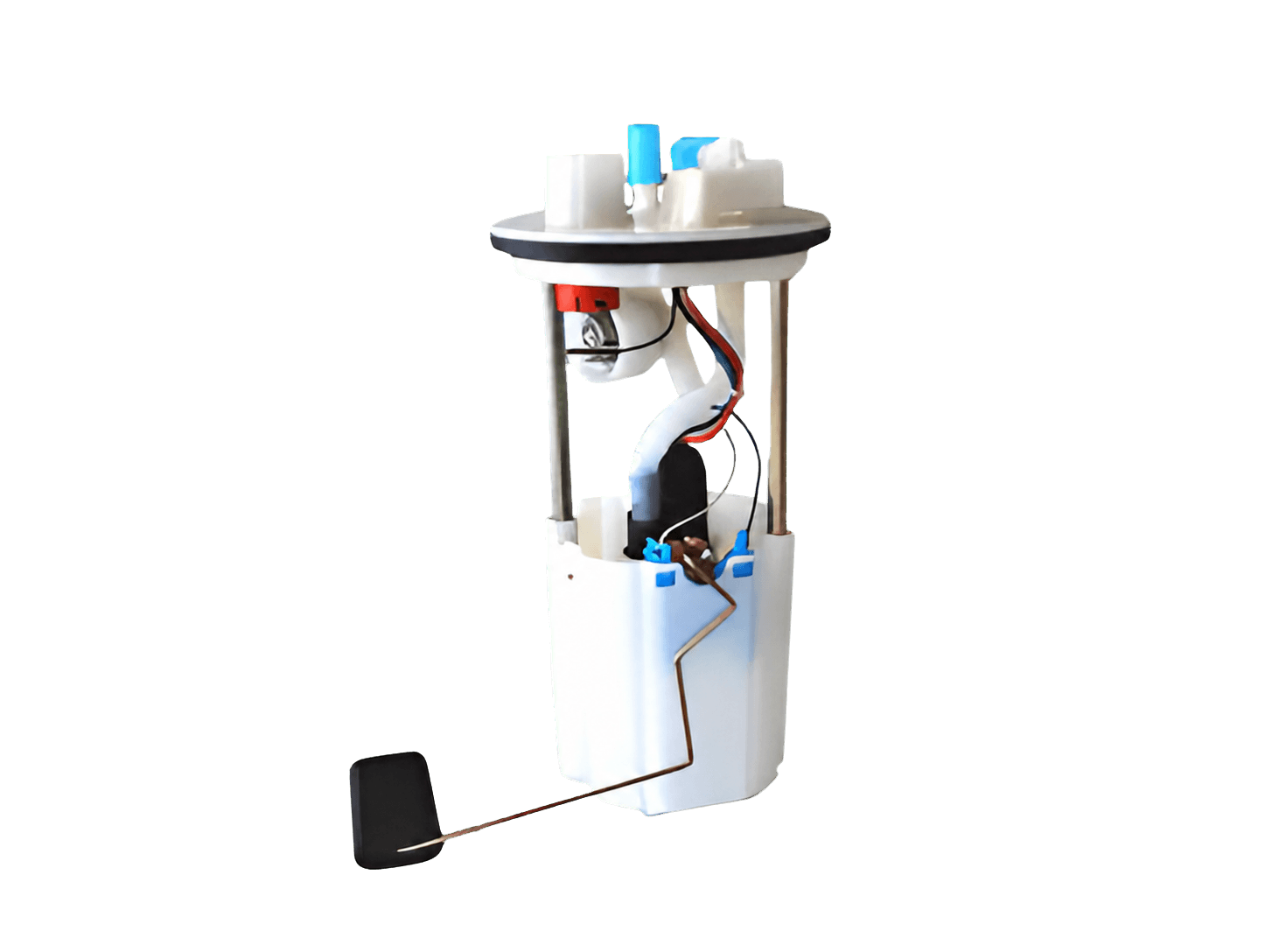
Fuel pump assembly
Sliding wear affects pump motion; fuel-induced dimensional change alters fits. Balance wear with dimensional retention and define fluid checks by fuel type and customer requirements.
Material direction for the selected part · Fuel pump assembly
Confirm materials against temperature, media and part requirements
Seat adjustment & guidance
For frequent starts, address stick-slip noise; for long reciprocation, clearance growth. Compare starting force and wear by steel/plastic rail and dust exposure.
Seat Guide Ring
Eccentric loads cause one-sided wear and reduced guidance accuracy. Compare low friction and wear resistance, then fit after adjustment cycles.
Bushings & sleeves
Material direction for the selected part · Seat Guide Ring
Wear-resistant & low-friction POM
For meshing or sliding wear and clearance growth, shortlist MoS₂-modified EMS102 and EMS162. Start with EMS102 for flow-sensitive molding and EMS162 when tensile strength leads selection.
For low-speed starts, dry sliding or stick-slip noise, start with PTFE-modified EPTL402. Compare starting force, running torque and wear separately for steel–plastic and plastic–plastic pairs.
View materials & gradesControl & actuation
For continuous meshing, control tooth heat and wear; for starts or reversals, balance root loading with impact toughness.
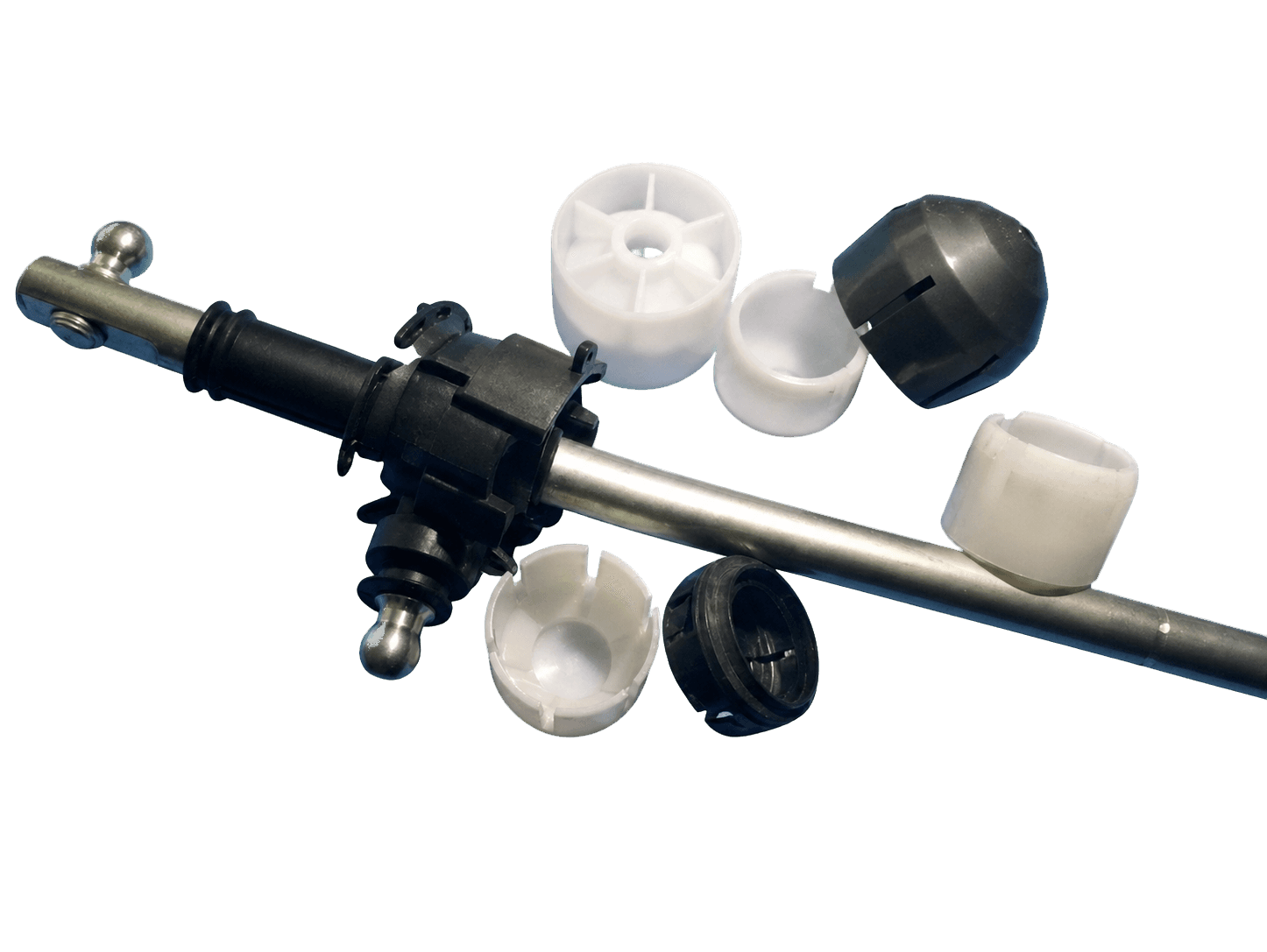
Gear shifter
Frequent opening exposes stick-slip noise; mating wear changes feel. Balance low starting resistance with dimensional retention; compare operating force after cycling.
Material direction for the selected part · Gear shifter
Wear-resistant & low-friction POM
For meshing or sliding wear and clearance growth, shortlist MoS₂-modified EMS102 and EMS162. Start with EMS102 for flow-sensitive molding and EMS162 when tensile strength leads selection.
For low-speed starts, dry sliding or stick-slip noise, start with PTFE-modified EPTL402. Compare starting force, running torque and wear separately for steel–plastic and plastic–plastic pairs.
View materials & gradesRetention & latching
Control clip-root assembly strain and sustained-clamp creep separately. For exposed parts, compare toughness and color after light aging; check cracking in cold assembly.
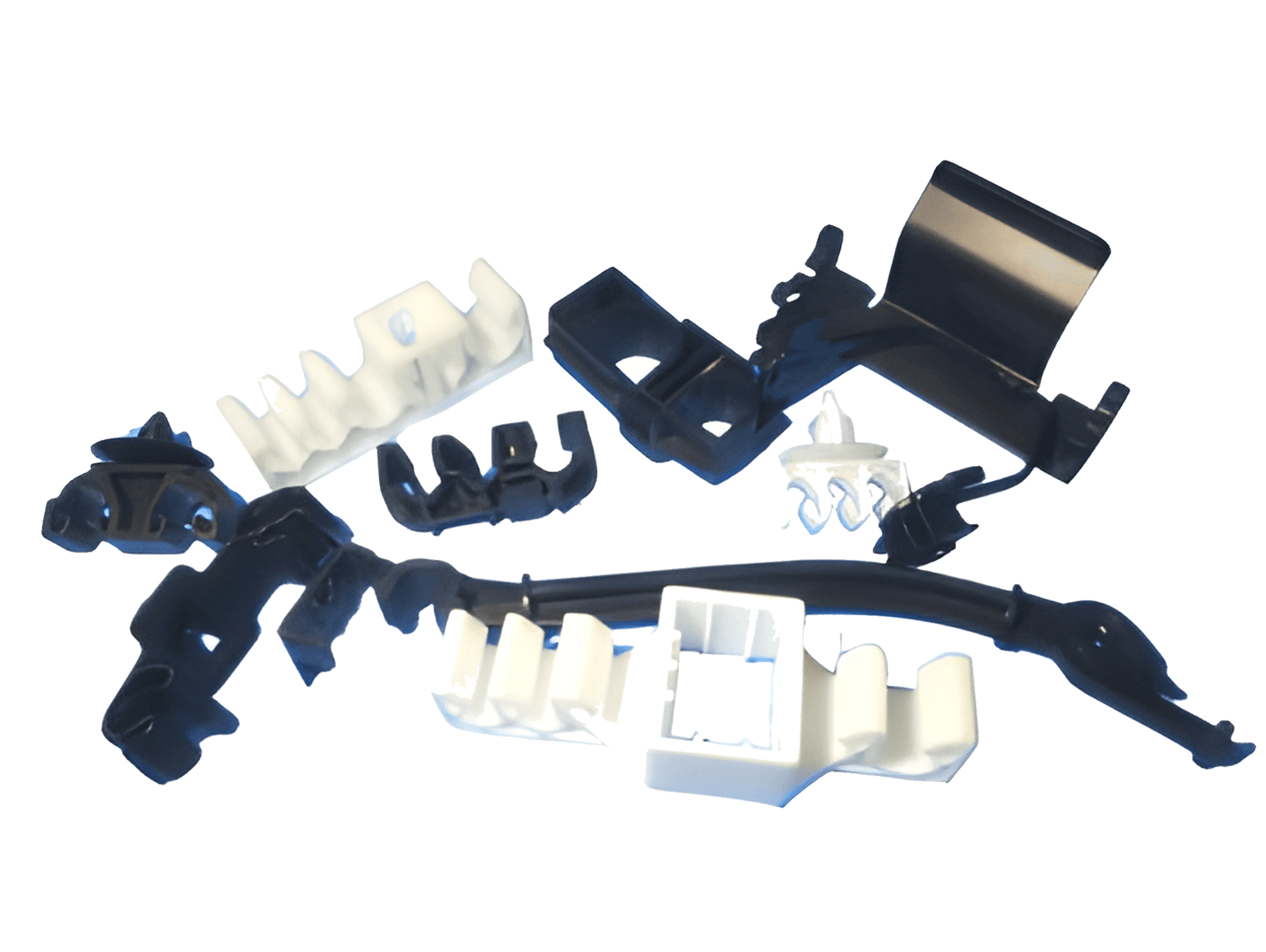
Automotive clips and fasteners
Clip roots concentrate assembly stress; sustained clamping can reduce retention. Balance notch toughness and creep, then recheck cold assembly cycles.
Material direction for the selected part · Automotive clips and fasteners
High impact resistance POM
For assembly impact, sudden loads or cold cracking, start with toughened POM EHI402T. Balance notched impact with stiffness and recheck clip retention or drive clearance.
View materials & gradesNext step
Grade data and project enquiries
Send a part drawing or function, the current failure and material, plus known operating conditions. Receive a candidate-grade comparison, TDS and molding-trial sample support, with the key checks for your part.
Discuss Your ApplicationCustomer Case Studies
- EGH402H · Automotive window regulator carrier plateFurther vehicle-project validation
- EGH602H · Automotive wiper motor gearbox housingSmall-batch production validation
- EGH502H · Automotive seat adjuster positioning plateDurability and system certification stage
Automotive quality-management system
For plastic-granule manufacturing